Real estate is still worth it in 2026 for the right person, and it is a bad bet for most people who enter the way most people do: undercapitalized, unsupported, and expected to figure the whole business out alone. Here are the numbers behind both halves of that sentence, so you can decide honestly which person you are.
I am not going to talk you into the career. You can find hundreds of recruiters who will do that. Instead, this is the industry's own member data, the real cost of getting licensed in Minnesota, the market picture in Central Minnesota and the Brainerd Lakes Area, and the questions you should be asking before you hand anyone a cent.
The Short Answer
Yes. Real estate still pays well for agents who last: the median REALTOR grossed $58,100 in 2024, and veterans with 16 or more years earned $92,500. But new agents with two years or less earned a median of $8,100, and 62 percent made under $10,000. It comes down to your runway, your plan, and who is in your corner.
How much do real estate agents actually make in their first years?
The most useful data is the National Association of Realtors' annual member profile, which reports what REALTORS said they actually earned in 2024. The picture is not one number. It is two different careers stacked on top of each other:
| Group of agents | Median gross income, 2024 |
| All REALTORS, every experience level | $58,100 |
| 16 or more years of experience | $92,500 |
| 2 years of experience or less | $8,100 |
| Share of new agents earning under $10,000 | 62 percent |
The typical REALTOR closes around 10 transaction sides in a year, and the income sits, as you can see, entirely in the experienced column. If you are walking in cold with no clients, no database, and no system, the honest expectation is the bottom of that table, not the top. Most new agents land in the bottom half, though no one mentions that in the recruiting pitch.
That is not pessimism, it is the base rate. Base rates are what the industry lets the best people ignore while everyone else discovers. Entering with your eyes open at the base rate is exactly how you get the right side of it.
Is it true that most new agents quit?
Yes, the pattern is real. The frequently quoted figures, that around 75 percent of new agents fail in their first year and 87 percent are gone in five, are widely repeated shorthand rather than an exact NAR-published statistic, so treat them as directional. The direction is bad. Almost every attrition number in the industry points the same way, and it points at the entry model, not at the new agent.
Here is what actually ends first-year careers, in order of how often we see it:
No lead generation system. The license is the easy part; the pipeline is the business. Without one, empty calendars and "it takes time" conversations flatten motivation by month three.
No cash runway. Commission-only income can mean two empty quarters. Most new agents run out of money before their first closing check clears, and no brokerage split fixes that.
No training or mentorship. For too many new agents, the onboarding experience is a login and a "good luck". Pricing, contracts, negotiations, and crisis handling get learned by expensive trial and error.
No emotional support. Rejection is the job in year one. Without peers or a leader who has been through it, the isolation becomes the reason agents leave.
Notice what is not on that list. Talent is not the failure. Work ethic is not the failure. The entry model is broken, not the agent. We wrote more about how this shows up in an average week in The Busy Trap, where the gap between frantic activity and real progress burns more careers than laziness ever will.
Are there too many agents right now, or too few?
Both, and it matters to your decision. The agent count has been contracting, not growing. NAR membership was above 1.53 million near the end of 2024, fell below 1.45 million by the middle of 2025, and posted its first annual decline in more than a decade in 2023. The widely repeated "too many agents" storyline is now statistically true: the shakeout is removing exactly the agents who entered without a system, while the transactions remain and the survivors absorb them.
| What people assume | What the data actually shows |
| "Real estate is saturated, everyone is an agent now" | Membership is shrinking for the first time in over a decade. The room is getting less full, not more. |
| "It's a young person's game" | The median REALTOR is about 57, and only about 11 percent are under 40. A wave of retirement is coming. |
| "A higher split guarantees higher income" | A split only matters when you close. Two deals at 100 percent loses to ten deals at a 60 percent split. |
A contracting market is friendlier to agents with a system and merciless to agents without one. Pick your side of that sentence before you spend any money.
What does it cost to get your Minnesota license, and how long does it take?
The license is the cheap part. Minnesota requires 90 hours of state-approved pre-licensing education, a salesperson exam, and an actively licensed broker to sponsor you. Budget roughly $600 to $800 and two to four months:
90 hours of courses. Three state-approved 30-hour classes, roughly $225 to $600 depending on provider and format.
Pass the exam. The Minnesota salesperson exam is administered by PSI, around $63 to $68 for the combined state and national sections.
Find a sponsoring broker. Your broker submits the license application. This is the real reason your first brokerage choice matters more than your first commission split.
Apply and maintain. File through the Department of Commerce's PULSE portal with an application fee around $100 plus a small tech surcharge. You must be 18 or older with a valid SSN or ITIN, and you renew by June 30 each year.
Confirm current fees before you pay anything, they do change. Then the real math: the license is cheap, and the first year without income is expensive. If you do not have at least six months of living expenses banked, that is not a character flaw, it is a math problem. No split fixes it.
What is the market actually like in the Brainerd Lakes Area?
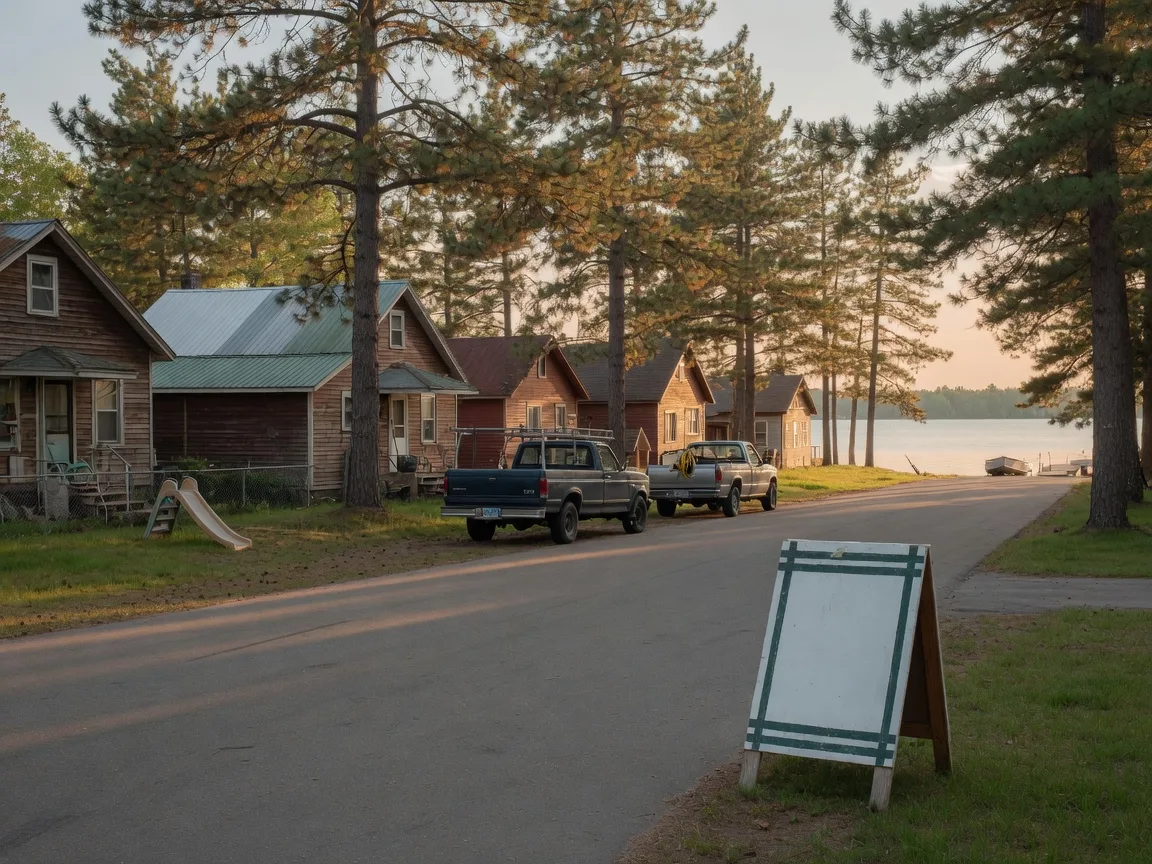
This is where the national numbers stop predicting your life. Crow Wing County, which covers Brainerd, Baxter, and the lakes corridor through Nisswa, Crosslake, and Pequot Lakes, sits at a county median sale price around $342,000 in early 2026, up roughly 5 percent year over year. Baxter's median stays near $369,000, Brainerd's around $295,000, and lakefront is the premium tier, with countywide lakefront listings averaging above $600,000 and starting in the mid-$400,000s.
The durability is real: about 42 percent of price appreciation over the past five years, driven partly by Twin Cities second-home demand. The seasonal swings are also real and extreme. Crow Wing County behaves like a vacation lake market, not a year-round one. Active listings have swung from roughly 144 in a late-winter trough to more than 900 as the spring-summer ramp begins, a swing of well over 500 percent, and roughly one in three homes in the county is vacant or seasonal.
What does that mean for you? Demand is concentrated between April and August. An agent who only generates in the summer will go three months with no pipeline entering the winter, and in a land of frozen lakes that is the classic first-year killer, not because the market is dead, but because none of the "conventional" advice prepares you for it. We wrote the specific, honest version in How to find consistent leads in a seasonal market. Read it before you commit to a lake-market career.
When does going solo in your first year actually make sense?
The honest answer: rarely, and only if you can check three boxes. You have 8 to 12 months of savings set aside. You already sit inside a client-rich network, family, friends, former coworkers, business owners, who will give you a first appointment within weeks. And you have proof you can run a business without anyone holding you accountable.
If all three are true, a high split solo launch is a reasonable bet. If not, the math is brutal and you should run it before you trust anyone: 100 percent of two closings is far less than 60 percent of ten. In year one the scarcity is not split. It is volume, and volume comes from leads, systems, a launch plan, and someone who has already done the walk. We built a team vs. solo calculator that runs this exact math on your numbers. Use it. If it says solo, respect it. If it says team, respect it that much more.
What should you demand from a brokerage or team before you commit?
Every recruiter will tell you about "support". Almost none will show it itemized. Think of this as the salary negotiation of real estate; walk in prepared and get answers in writing:
| Ask for this | Why it decides your first year |
| How do leads get into my pipeline, how many per month, and who has them? | The only thing that closes the gap between day one and your first closing is lead flow. "We have leads" without a number is not an answer. |
| Is there a structured training program, and who actually runs it week to week? | You need a live person teaching scripts, pricing, negotiation, and paperwork, not a video library with a login. |
| Who is my mentor on day ten? | A team that can name your mentor before you sign will also be there when a deal goes sideways. |
| Show me every fee in writing, before the split. | E&O insurance, franchise, tech, and transaction fees all come off the top. Small per closing, real by closing ten. |
| How long do agents stay, and why do they leave? | Tenure and churn tell the truth the brochure omits. Ask any team for one current agent you can call as a reference. |
The same diligence applies if you are considering a switch from your current shop. Run the Team Value Scorecard, 15 categories that score leads, leadership, transaction coordination, and culture, and let an actual number tell you what you have been accepting.
What actually changes the odds for a new agent?
Three things, and none of them is a tagline. A plan into the first 90 days. A system that keeps running when motivation does not. And a weekly accountability check that has no reason to lie to you.
A team that hands you a week-by-week 90-day plan, database built in week one, agreements in escrow by week three, follow-up running by week four, and then checks on that plan is materially different from a team that hands you a desk and a slogan. We published the exact version of that plan as the 90 Day Agent Launch Plan, and it is free to read. Compare it against anything a recruiter wrote for you; then decide whom you would rather trust with a year of your life.
Decide on These Three Questions, Not a Brochure
1. Can you survive on no commissions for six months? Not "hope," a number in savings. If the answer is no, entering now is a gamble with the worst odds of the career.
2. Do you have a system for leads and follow-up, or just a strong will? Willpower is fuel, not infrastructure. Systems are what make a business survive a bad quarter.
3. Who is accountable to you, weekly, this year? If the honest answer is "nobody," tell me how that ends when the market goes quiet in November.
Two more reads in this library answer where you go from here. From part time to full time covers the bridge if you are not ready to quit your day job. And Should you join a team or go solo walks the biggest structural decision in the career. If you are already licensed and producing, skip ahead to You have a great split, but were built for more, and decide whether that headline describes you.
The honest bottom line: real estate in 2026 is not a lottery ticket and it is not a gold rush. It is a demanding, system-heavy, relationship business with real income swings, and it punishes the unprepared with exact, predictable math. Those numbers are not an argument to stay away. They are the argument to go in prepared: with capital, with a plan, and with a structure around you that only gets paid what it is worth when you close.

Noah Goedker
Team Leader, Elevate Group at eXp Realty
A third-generation real estate agent and lifelong resident of the Brainerd Lakes Area. Noah built Elevate Group because he believes agents should not have to choose between keeping their commission and having the support system they need to survive year one and the years after.